
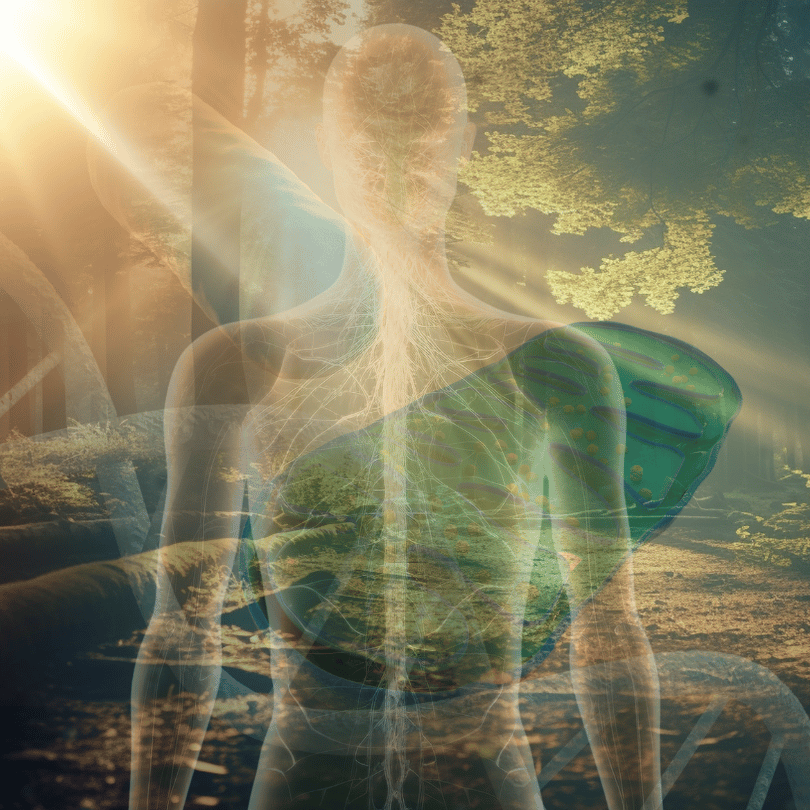
We tend to think of light as something we see. It illuminates our surroundings, helps us navigate the world and allows us to distinguish day from night. But light does so much more than that. It is one of the most fundamental environmental signals our bodies respond to, influencing everything from hormone production and sleep to cellular energy, metabolism and immune function. And perhaps even more fascinatingly, our bodies produce light of their own.
Every living cell participates in an intricate exchange of energy, and research has demonstrated that human cells emit incredibly faint amounts of light, known as biophotons. This opens up a rather extraordinary way of thinking about human biology. We are not simply physical structures made up of organs, tissues and biochemical reactions. We are energetic, electrical and light-responsive organisms, intricately connected to the environment around us.
Let’s explore some of the fascinating ways light interacts with our biology, and why getting outside and reconnecting with natural sunlight may be one of the simplest things we can do for our health.
We Produce Light
One of the more extraordinary discoveries in cellular biology is that living cells emit ultra-weak light, known as biophotons or ultra-weak photon emissions (UPE). These emissions are produced as a byproduct of normal metabolic activity, particularly reactions involving mitochondria and oxidative processes within the cell.
Our mitochondria are often referred to as the powerhouses of the cell. Their primary role is to produce ATP (adenosine triphosphate), the energy currency that allows our cells to function. During this process, reactive oxygen species (ROS) are also generated. When these reactive molecules interact with cellular components, energy can be released in the form of tiny packets of light called photons. These emissions are extraordinarily faint, far below what our eyes can perceive, but they are measurable using specialised scientific equipment.
It is a fascinating reminder that life is not simply a collection of chemical reactions. There is an energetic dimension to the activity occurring within every cell.
The idea that we are quite literally emitting light might sound a little mystical, but there is a scientific basis for it. What we don’t yet fully understand is precisely what role these emissions play in cellular communication and biological regulation.
Light Is Our Biological Timekeeper
Perhaps one of the most important relationships we have with light is its influence over our circadian rhythm.
Our bodies operate according to an internal biological clock, coordinating thousands of physiological processes across a roughly 24-hour cycle. This includes hormone production, body temperature, digestion, immune activity, metabolism and sleep.
And the primary environmental signal used to synchronise this internal clock is light!
Specialised cells within the retina of our eyes, called intrinsically photosensitive retinal ganglion cells (ipRGCs), contain a light-sensitive pigment known as melanopsin. These cells are particularly responsive to blue wavelengths of light, around 480 nm, which are abundant in natural daylight. Unlike the rods and cones responsible for vision, these cells are primarily concerned with detecting ambient light levels. They communicate directly with a small region of the brain called the suprachiasmatic nucleus (SCN), located in the hypothalamus.
Think of the SCN as the body’s master clock. It receives information about the external light environment and uses this information to coordinate our internal biological rhythms. When morning light enters the eyes, it signals to the brain that the day has begun. This helps regulate the release of cortisol, our natural morning alertness hormone, supporting wakefulness, energy and metabolic activity.
As daylight fades, the brain receives the opposite signal. The pineal gland is then able to increase the production of melatonin, our primary sleep-promoting hormone. Melatonin is produced from serotonin, and its release helps prepare the body for rest, repair and recovery. This is why the timing of light exposure matters so much. Our biology relies on a clear distinction between day and night.
Why Morning Sunlight Matters
Getting outside shortly after waking is one of the simplest ways to support your circadian rhythm. Natural morning light helps anchor the SCN, supporting an appropriate cortisol awakening response and setting the biological timer for melatonin production later that evening. This influences much more than sleep. A well-regulated circadian rhythm helps coordinate hormonal activity, appetite, digestion, blood glucose regulation and energy levels throughout the day.
Conversely, spending most of the day indoors under artificial lighting, followed by hours of bright screen exposure at night, can confuse these biological signals. Artificial light, particularly blue-enriched light in the evening, can suppress melatonin production and delay the body’s transition into sleep. Our modern environment has created a rather unusual situation. We spend much of our day indoors, under relatively dim artificial lighting, then expose ourselves to bright artificial light long after the sun has disappeared.
Biologically speaking, we have almost reversed the light environment our bodies evolved to respond to.
Light and Mitochondrial Energy Production
The relationship between light and mitochondria extends beyond the production of biophotons. Mitochondria are also responsive to certain wavelengths of light, particularly red and near-infrared wavelengths. This is the basis of a therapeutic approach known as photobiomodulation, which uses specific wavelengths of red and near-infrared light to influence cellular activity.
One of the proposed mechanisms involves cytochrome c oxidase, an important enzyme within the mitochondrial electron transport chain. This enzyme can absorb red and near-infrared light, potentially influencing nitric oxide binding, electron transport and ATP production. Research into photobiomodulation has explored its potential applications in tissue repair, inflammation, wound healing and pain management.
It is an exciting area of research because it demonstrates that light is not merely an external environmental signal. Under certain conditions, it can interact directly with the machinery responsible for producing cellular energy.
Your Skin Is More Than a Protective Barrier
We often think of the skin as simply a physical barrier protecting us from the outside world. However, it is also a metabolically active organ that responds to sunlight in several important ways. One of the best-known examples is vitamin D synthesis. When UVB radiation reaches the skin, it converts a cholesterol-derived compound called 7-dehydrocholesterol into previtamin D3, which subsequently undergoes further conversion into vitamin D.
Vitamin D is essential for calcium regulation and bone health, but its influence extends much further. It also plays important roles in immune regulation, cellular differentiation and gene expression. Sunlight also influences the production and release of other biological compounds. UVA radiation, for example, can stimulate the release of nitric oxide from stores within the skin. Nitric oxide is a signalling molecule that helps relax blood vessels, supporting circulation and vascular function. UV exposure can also stimulate the production of beta-endorphins within the skin. These are naturally occurring compounds involved in pain modulation and wellbeing.
Of course, this doesn’t mean we should expose ourselves to excessive UV radiation. Sunburn and cumulative UV damage increase the risk of skin cancer and premature skin ageing. The goal is to develop a sensible relationship with sunlight, not to seek unlimited exposure.
Light, Mood and the Nervous System
Have you ever noticed how different you feel after spending a morning outside compared with spending the entire day indoors?
There is a reason for this.
Light influences several neurological pathways involved in mood, alertness and cognitive function. Bright daytime light helps regulate serotonin activity, a neurotransmitter involved in mood, emotional regulation and sleep-wake biology. Serotonin is also the biochemical precursor to melatonin, linking our daytime and nighttime physiology. Light exposure also influences dopamine signalling within the retina and brain pathways involved in visual processing and alertness.
This is one reason why bright daytime light is an important consideration when supporting people experiencing low mood, disrupted sleep or seasonal changes in energy. It is also why I often encourage patients to make morning outdoor light exposure part of their daily routine. It is free, accessible and supports several important physiological processes simultaneously.
Light and the Gut Microbiome
Something particularly interesting emerging from research is the relationship between sunlight exposure and the gut microbiome. We typically think of gut health as being influenced by diet, stress, medications, digestive function and the foods we eat. But our environment also plays a role. Research investigating UVB exposure has identified changes in gut microbial diversity, with some studies suggesting that sunlight exposure may favour beneficial bacterial populations. One proposed mechanism involves vitamin D. UVB exposure stimulates vitamin D production in the skin, which can influence immune signalling and inflammatory pathways throughout the body.
Our gut microbiome also follows its own daily rhythm. The abundance and activity of different microbial populations fluctuate across the 24-hour cycle, influenced by feeding patterns, sleep and circadian signalling. This is another reason why consistent sleep-wake times, regular meals and appropriate exposure to natural light may be important considerations when supporting gut health. The gut does not operate independently of the rest of the body. It is part of a much larger interconnected system.
Light, Metabolism and Blood Sugar Regulation
Our metabolic health is also closely connected to our circadian rhythm.
Hormones involved in glucose regulation, insulin sensitivity and appetite follow daily patterns. Disruption to these rhythms, particularly through irregular sleep and light exposure, may negatively influence metabolic function. Research has linked exposure to artificial light at night and circadian disruption with impaired glucose regulation and insulin resistance. There is also growing interest in the role of light-sensitive proteins called opsins, which are found in tissues outside the eye, including the skin, brain and adipose tissue.
Some of these proteins appear to participate in local biological responses to light, including processes involved in metabolism and temperature regulation. While much of this research is still developing, it highlights an important point: our relationship with light is not limited to our eyes. Light-responsive biology is present throughout the body.
Darkness Is Medicine Too
While we spend a lot of time discussing the benefits of sunlight, we shouldn’t overlook the importance of darkness.
Our bodies need both.
Melatonin is often described as a sleep hormone, but its functions extend beyond helping us fall asleep. It is also a powerful antioxidant involved in protecting cells from oxidative stress. During sleep, the body undertakes important restorative processes. Cellular repair, immune regulation, hormonal coordination and the removal of metabolic waste from the brain are all influenced by sleep quality and circadian biology. Autophagy, the process by which cells break down and recycle damaged cellular components, is another important part of cellular maintenance. The relationship between circadian rhythms, melatonin and these restorative processes is an active area of research.
It is worth remembering that the body is designed to experience a rhythm of activity and rest, light and darkness, energy production and recovery. We cannot expect our biology to function optimally when we constantly override these natural rhythms.
Light Medicine. A History of Healing Through Sunlight
The therapeutic use of light is not a new concept.
In fact, one of the earliest pioneers of modern phototherapy was a physician named Niels Ryberg Finsen, who was awarded the Nobel Prize in Physiology or Medicine in 1903 for his work using concentrated light radiation to treat disease. Finsen developed specialised lamps that delivered concentrated short-wavelength light to treat lupus vulgaris, a form of tuberculosis affecting the skin. His work was remarkable. Historical clinical records documented significant success in treating patients who previously had very few effective treatment options.
He also investigated the use of red-filtered light in patients with smallpox, observing that excluding certain wavelengths of light could reduce the severity of skin inflammation and scarring. His discoveries helped establish the foundations of modern phototherapy.
Today, light-based treatments have applications in several areas of medicine, including:
- Narrowband UVB therapy for psoriasis, eczema and vitiligo.
- Blue-light phototherapy for neonatal jaundice.
- Photodynamic therapy for certain skin cancers and other conditions.
- Red and near-infrared photobiomodulation for selected applications involving tissue repair and pain management.
It is fascinating to think that something as fundamental as light, which has sustained life on Earth for billions of years, continues to offer new possibilities in modern medicine.
How to Bring More Natural Light Into Your Daily Life
So, what can we actually do with all of this information?
Fortunately, supporting our relationship with natural light doesn’t need to be complicated. Some of the most beneficial changes are also the simplest.
Get outside in the morning. Aim to spend some time outdoors shortly after waking. Even a short walk, sitting in the garden or having your morning coffee outside can help expose your eyes to natural daylight. You don’t need to stare directly at the sun.
Spend time outdoors during the day. Try to incorporate natural light into your daily routine rather than spending the entire day under artificial lighting. Take your lunch break outside, walk between appointments or open the curtains and windows.
Reduce bright artificial light at night. Dim your household lighting in the evening and reduce exposure to bright screens in the hours before bed. Consider using warmer lighting and creating a darker sleeping environment.
Respect your sleep-wake rhythm. Try to maintain relatively consistent waking and sleeping times. Your circadian rhythm thrives on regularity.
Enjoy nature. Take your shoes off in the garden, walk amongst the trees, sit in the sunshine or simply spend some time observing the natural world. There is something deeply restorative about reconnecting with the rhythms of nature.
And importantly, be sensible with UV exposure. Avoid sunburn, follow Australian sun protection guidance and consider your skin type, location, season and individual risk factors.
We Are Part of Nature, Not Separate From It!
I find it fascinating that something as seemingly simple as sunlight can influence so many aspects of human physiology.
From the mitochondria producing energy within our cells to the brain regulating our hormones, the skin synthesising vitamin D, and the gut microbiome responding to our daily rhythms, light is woven into the very fabric of our biology. We have become accustomed to living in a world where we can manufacture our own environments. We control the temperature, the lighting, the food we eat and even the hours we choose to sleep. But our biology still carries the imprint of the natural world. We evolved beneath the sun, in relationship with the changing seasons, the rhythm of day and night and the cycles of nature.
Perhaps one of the simplest ways to support our health is to remember this:
Get outside. Let the morning light reach your eyes. Allow your body to experience the contrast between a bright day and a dark night.
Sometimes, the most profound medicine isn’t something we need to buy, swallow or apply. Sometimes, it is simply remembering that we are part of nature, and allowing our bodies to live a little more in rhythm with it.
Ashleigh van Nierop BHSc Nat, BCompMed
Naturopath | Medical Astrologer
BioSoul Naturopathy, Kalamunda, Perth Hills